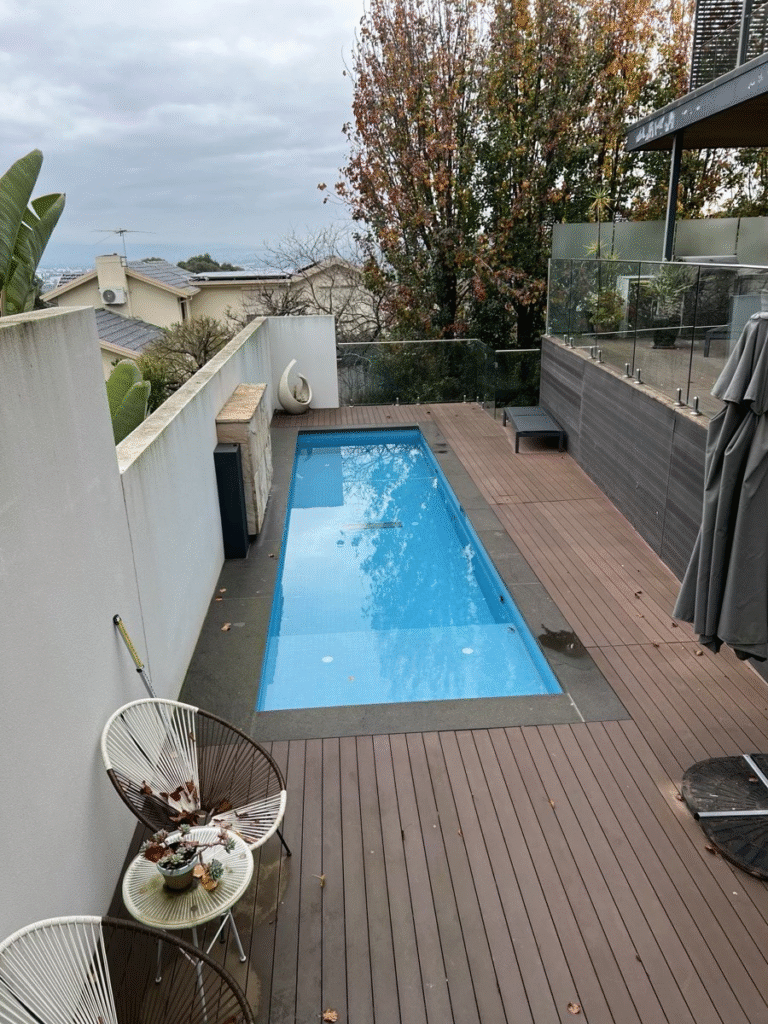
Pool Safety in Victoria: What Every Pool Owner Needs to Know
Owning a pool in Victoria comes with real responsibilities. Not just to keep the water clean and the equipment running, but to ensure the barrier surrounding your pool meets the legal standards designed to prevent drowning and serious injury.
Every year, young children are seriously injured in backyard pool accidents in Australia. The Victorian Government introduced mandatory pool barrier inspections precisely because most of those accidents are preventable. A compliant barrier works. A non-compliant one may not.
Pool safety in Victoria is governed by a clear legal framework. If you own a pool or spa capable of holding more than 300mm of water, the law requires you to register it with your local council, maintain a compliant barrier, and hold a valid compliance certificate.
Understanding what that means in practice is what this article covers.
What Are the Pool Safety Rules in Victoria?
Pool safety rules in Victoria are set under the Building Act 1993 and Part 9A of the Building Regulations 2018. These laws apply to every pool and spa in the state, whether residential, commercial, or on a body corporate property.
The key requirements are straightforward. Your pool or spa must be registered with your local council. The barrier surrounding it must meet the applicable Australian Standard, which is determined by when the pool was built. A compliance certificate must be obtained from a registered inspector and lodged with your council every four years.
The four-year cycle is not optional. Your council will send a reminder when your certificate is due for renewal. Failing to act on that reminder can result in fines of more than $1,600 and ongoing non-compliance notices.
The standard assessed during an inspection is based on the construction date of the pool. Pools built before 1 November 2020 are assessed against one set of standards. Pools built after that date are assessed against a newer, stricter standard. Knowing which standard applies to your pool is the first step in understanding what your barrier must achieve.
Preparing for a Pool Safety Inspection
Preparing for an inspection can make the process much smoother and improve the chances of meeting pool safety compliance requirements on the first visit.
Before arranging pool inspection services, owners should check that the gate closes automatically and latches securely every time it is opened.
Objects such as chairs, pool equipment, or pot plants should be moved away from the fence so they do not interfere with the non-climbable zone.
It is also helpful to check that the fence remains at least 1200 mm high and that there are no large gaps beneath the barrier.
Taking a few minutes to review these points can help ensure the barrier meets pool safety regulations before the inspection takes place.
What is included in the Pool Barrier Inspection Checklist
Before booking pool inspection services, it helps to review the barrier yourself. A quick check can identify simple issues that might otherwise lead to a failed inspection.
Here are some key points to review before an inspection:
1. Gate operation
Open the gate and allow it to close on its own. It should close automatically from any open position and latch securely every time.
2. Latch position
The latch should be located on the inside of the gate and positioned high enough that a child cannot reach it from outside the barrier.
3. Barrier height
The fence must be at least 1200mm high around the entire pool area. If any section falls below this height, the barrier may not meet pool safety regulations.
4. Gaps under the barrier
The gap between the bottom of the fence and the ground should not exceed 100mm.
5. Non-climbable zone
Check that there are no objects within 900mm of the inside of the barrier that could be used as a step. Furniture, planters, and pool equipment should be kept well away from the fence.
6. Windows and doors
If a window forms part of the barrier, it may require restrictions on how far it can open to meet pool safety compliance requirements.
Taking a few minutes to review these points can help ensure the barrier meets the Pool Safety in Victoria standards before the inspection takes place.
What Is Pool Safety Compliance and What Does the Certificate Mean?
Pool safety compliance means your pool barrier meets the applicable Victorian standard. It is confirmed by a registered inspector who issues a Form 23 Certificate of Pool and Spa Barrier Compliance on the day of a successful inspection.
That certificate must be lodged with your local council within 30 days of being issued. It remains valid for four years, after which a new inspection and a new certificate are required.
If the barrier does not meet the standard, the inspector issues a Form 24 Certificate of Barrier Non-Compliance. This is not a fine or a penalty. It is a notice that outlines what needs to be fixed. Pool owners have 60 days to make the required corrections. Once the corrections are made, a follow-up inspection is carried out. At Bayside Peninsula Pool Compliance, the re-inspection is provided at no additional charge.
Not lodging a valid compliance certificate with your council is a separate offence. Fines apply regardless of whether the barrier itself is compliant. Compliance and lodgement are two distinct steps.
What Does a Pool Inspector in Melbourne Look For That Owners Often Miss?
A professional pool inspector in Melbourne evaluates more than just the fence around your pool. The inspection focuses on how the entire barrier system works together to prevent unsupervised access.
At Bayside Peninsula Pool Compliance, Leigh conducts inspections with a detailed understanding of Victorian pool safety regulations and the common issues found in residential barriers.
Many inspection failures occur because of small changes around the property that owners may not notice. For example, outdoor furniture placed near the fence, plants growing too close to the barrier, or gates that have gradually shifted out of alignment.
Leigh’s experience conducting hundreds of inspections across Melbourne helps identify these problems quickly and provide practical solutions to restore pool safety compliance.
Working with an experienced pool inspector in Melbourne ensures that inspections are thorough and aligned with current pool safety rules.
Common Reasons Pool Barriers Fail Inspection
Many barriers fail inspections due to small issues that develop gradually over time. These problems often go unnoticed until they are identified during pool inspection services.
Some of the most common reasons for failing an inspection include:
Gate not self-closing properly
If the gate does not close automatically from every open position, it does not meet pool safety rules.
Faulty gate latch
A latch that sticks, fails to engage, or can be reached from outside the barrier can lead to non-compliance.
Objects near the barrier
Outdoor furniture, pot plants, and even pool equipment placed too close to the fence can create a climbing point and breach pool safety regulations.
Gaps under the fence
Ground movement or landscaping changes can create gaps larger than the allowed 100mm.
Fence damage or corrosion
Loose panels, rusted sections, or structural damage can affect the barrier’s effectiveness.
Most of these issues are relatively simple to fix, but they must be addressed before pool safety compliance can be achieved.
How Does Pool Safety Compliance Work When Buying or Selling a Property?
Pool compliance is a relevant consideration whenever a property with a pool or spa changes hands.
As a buyer, confirming that the pool is registered with the council and that a valid compliance certificate exists before settlement protects you from inheriting a non-compliant barrier and the costs of rectifying it. If the certificate is expired or was never lodged, that is a cost and a process that falls to you as the incoming owner.
As a seller, presenting a current compliance certificate gives buyers confidence and removes a potential point of negotiation. If your certificate is approaching its four-year renewal, having a fresh inspection completed before listing removes uncertainty from the process entirely.
Property managers overseeing rental properties with pools also carry compliance obligations. The barrier must be compliant and certified throughout the tenancy, not just at the beginning of a lease.
What Do Pool Inspection Services Actually Cost?
The cost of pool inspection services can vary depending on the provider and location. However, most inspections are straightforward and involve a single visit to assess the barrier against Victorian pool safety regulations.
At Bayside Peninsula Pool Compliance, inspections are offered at a flat rate of $250 including GST.
This service includes:
- A full inspection of the pool barrier
- Assessment against current pool safety in Victoria standards
- A detailed explanation of the inspection outcome
- Same-day certification if the barrier meets pool safety compliance requirements
If the barrier requires corrections, the necessary changes are explained clearly so they can be addressed before a follow-up inspection.
Working with a qualified pool inspector in Melbourne ensures the inspection is completed according to current pool safety rules.
Take Away
Pool barriers save lives. The Victorian legislation requiring mandatory inspections exists because unsupervised access to a pool by a child is a genuine and preventable tragedy.
Compliance is not a bureaucratic exercise. A barrier that meets the standard is one that genuinely makes it harder for a child to access the pool without an adult. Every element that is checked during an inspection serves that purpose.
The process is also not complicated when you work with the right inspector. You receive a clear assessment, practical guidance if anything needs attention, and a same-day certificate if the barrier is compliant.
If your certificate is due, overdue, or you are simply not sure of your current status, the most sensible next step is to book an inspection.
Book your pool inspection with Bayside Peninsula Pool Compliance and VBA-registered inspector Leigh Harrington for flat-rate pricing, same-day certificates, and free re-inspections across Melbourne, Bayside Peninsula, and surrounding suburbs, call 0403 577 254 or email leigh@bppc.com.au today.
Frequently Asked Questions (FAQs)
Every four years. Your local council will send a reminder before the certificate expires. A new inspection must be completed and the certificate lodged with the council within 30 days of issue.
You receive a Form 24 Non-Compliance Certificate detailing what needs to be corrected. You have 60 days to make the repairs. Bayside Peninsula Pool Compliance provides a free re-inspection once corrections are complete.
Yes, all pools and spas capable of holding more than 300mm of water must be registered with your local council. Registration should have been completed by 1 November 2020 for existing pools.
Most inspections at Bayside Peninsula Pool Compliance are completed within 30 to 45 minutes. If the barrier is compliant, the certificate is issued the same day.